URMI
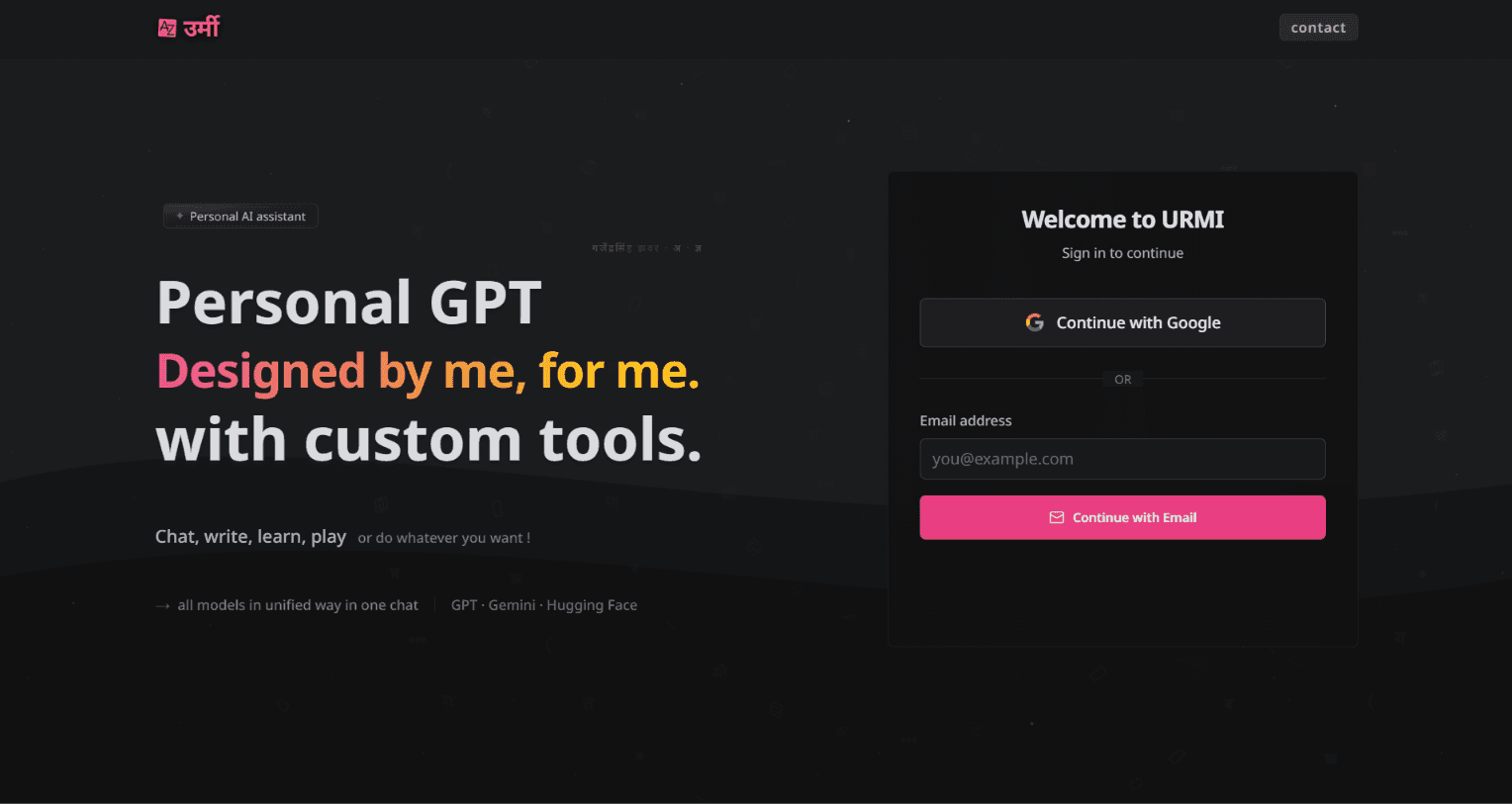
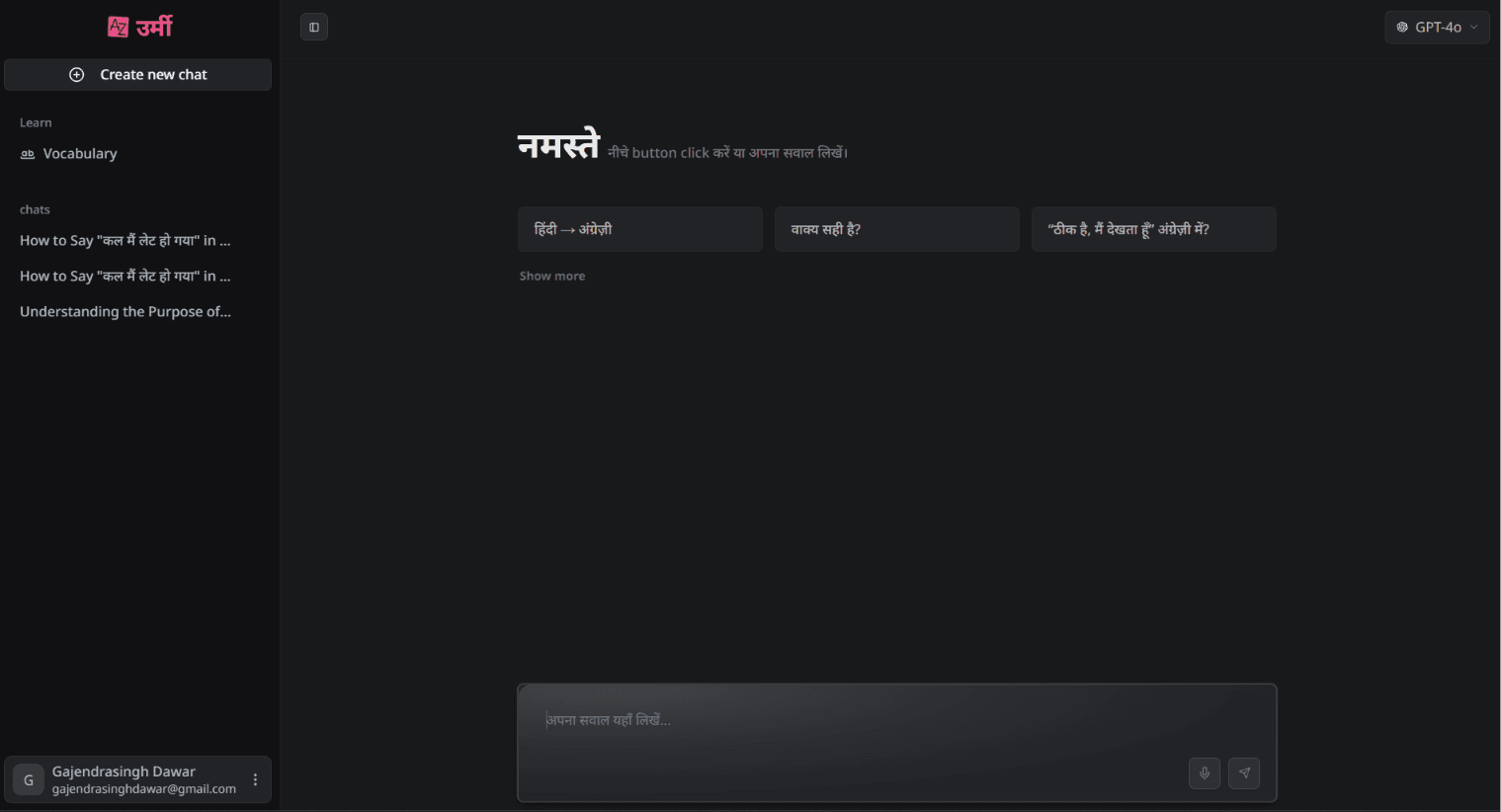
URMI is a full-stack AI workspace focused on a simple idea: users should own their conversations, memories, artifacts, and connected accounts instead of being locked into a single AI provider or chat interface.
The application already supports persistent conversations, AI-powered interactions, streaming responses, and a foundation for long-term memory and tool-driven workflows. Rather than treating chat history as disposable, URMI treats user state as durable infrastructure that can be reused across models and future interfaces.
What I Built
- Multi-model AI chat experience
- Persistent conversation history
- User-owned state and memory foundations
- Streaming AI responses using modern AI SDK patterns
- Tool-oriented architecture for future workflow automation
- Structured data persistence for conversations and artifacts
- Production deployment with a custom domain
Problem
Most AI applications are provider-centric. Users build context inside a single chat product, but conversations, memories, and generated artifacts become fragmented across different tools and interfaces.
When users switch providers, much of that context is lost.
Architecture Vision
URMI separates durable user state from model providers.
Instead of treating a model as the source of truth, URMI treats models as replaceable execution engines while preserving:
- conversations
- memories
- artifacts
- connected accounts
- future knowledge assets
This creates a foundation for a long-term personal intelligence layer that can evolve beyond a single chat interface.
Key Capabilities
- User-owned conversations, memory, and artifacts
- Resumable and replayable interaction history
- Multi-interface continuity (web today, terminal/Telegram in the future)
- Model portability over shared user state
- Tool and workflow integration architecture
- Incremental LLM Wiki knowledge-building workflow
Impact
URMI explores how personal AI systems can move beyond disposable chat sessions and become durable knowledge systems where learning, context, and decision trails compound over time.
Tech Highlights
- Next.js + React application architecture
- AI SDK + streaming orchestration for agentic responses
- Durable Streams for resilient state and replay patterns
- Drizzle + libSQL for structured persistence
- Azure AI services for AI related flows
- Modular tool system for memory, notes, and other workflows